|
|
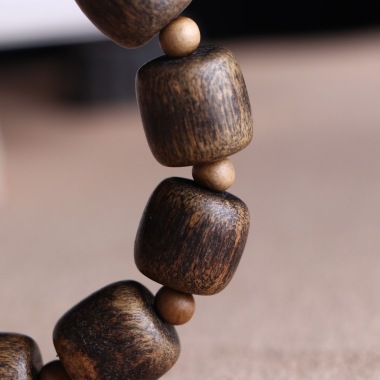
Cambodia, formerly known as Cambodia, has nurtured the highly sought after "Khmer agarwood" in the global spice market through its unique geographical environment and honey tree genes in the agarwood industry. As the core production area of Huian style agarwood, Khmer agarwood is famous for its aroma characteristics of "sweet and slightly sour, with a long-lasting honey flavor". Its formation process is closely related to tree species characteristics, aroma mechanism, and climatic conditions. This article will systematically analyze the uniqueness of Cambodian agarwood from the perspectives of biology, chemistry, and geography. 1、 Honey tree genes: the biological basis of Cambodian agarwood The main tree species of Cambodian agarwood is Aquilaria crassna, which has a unique cellular structure in its xylem. When the tree is infected by fungi or damaged by external forces, it secretes a large amount of resin to repair wounds. This process lasts for decades or even centuries, ultimately forming agarwood. The resin components of the honey tree are mainly sesquiterpenes, including agarwood spironols, alpha agarwood furans, etc. These substances give Cambodian agarwood a unique "sweet and sour" aroma. Unlike Xingzhou style agarwood (such as Kalimantan in Indonesia), which is mainly composed of ebony, Khmer agarwood has a fragrance closer to Vietnamese agarwood, but with a higher sweetness and a softer acidity. For example, the "Bodhisattva Sink" produced in Bodhisattva Province, Cambodia, whose fragrance is described as "a mixture of honey and citrus", is known as "natural perfume" in the Middle East market, and can last four to five days after being applied to the skin. 2、 Climate and Soil: The Geographic Code of Cambodian Agarwood The core production areas of Cambodian agarwood are concentrated in the provinces of Putrajaya and Kampong Thom in central Cambodia, which have a tropical monsoon climate with an average annual temperature of 27 ℃ and an annual precipitation of over 2000 millimeters. The rainy and dry seasons are distinct. This climate condition promotes slow growth of honey scented trees, dense wood fibers, longer resin secretion cycles, and higher fragrance density. In terms of soil, Bodhisattva Province is mainly composed of red soil, which is rich in iron and aluminum oxides and has a pH value of 5.5-6.5. This slightly acidic environment is conducive to fungal reproduction and accelerates resin synthesis. For example, local agarwood farmers have found that honey scented trees grown in red soil have a 30% higher yield than in other areas, and the agarwood blocks are larger with clearer oil lines. 3、 Fragrant Mechanism: Transformation from Trauma to Fragrant Charm The process of making Cambodian agarwood can be divided into three stages: Trauma period: After the tree is struck by lightning, insect infestation, or artificial drilling, wounds are formed, and fungi (such as Aspergillus flavus and Penicillium) invade the xylem. Resin secretion period: The tree initiates defense mechanisms and secretes resin to encapsulate fungi, forming a "resin layer". This stage can last for 10-50 years, and the resin color gradually changes from light yellow to dark brown. Maturity stage: The resin and wood fibers are completely fused to form agarwood. Khmer agarwood often exists in a "hollow" shape, as its resin secretion is concentrated in the core of the tree, causing the external wood to rot and the internal agarwood to be preserved. It is worth noting that the "sour aroma" of Cambodian agarwood is closely related to the microbial community in its aromatic environment. Research has shown that the content of lactic acid bacteria in agarwood from Bodhisattva Province is twice that of other production areas. This microorganism can convert certain components in the resin into acidic substances, thus forming a unique sour aroma. 4、 Market Value: The Leap from Spices to Collectibles Due to its scarce production (less than 5 tons per year) and excellent quality, the price of Cambodian agarwood remains high. Taking Bodhisattva Sinking as an example, the price of 1 kilogram of high-quality raw agarwood can reach 30000 US dollars, while the price of mature agarwood of the same weight (aged over 50 years) is even higher. Its market value is mainly reflected in three aspects: Spice use: used to make high-end incense, incense, or extract aloe oil (used in perfume and cosmetics). Medicinal value: Traditional Chinese medicine believes that Cambodian agarwood has the effect of "reducing qi and absorbing kidneys, warming the middle and clearing the liver", and is commonly used to treat asthma and stomach pain. Collection value: Due to the non renewable nature of resources, Khmer agarwood carvings and bracelets have become hot topics in the collection market. For example, a 50 gram bodhisattva sculpture can be auctioned off for up to $200000. |